In May 2024, Longyear Museum successfully completed a thorough restoration of 400 Beacon Street, the final residence of Mary Baker Eddy, the Discoverer, Founder, and Leader of Christian Science. In this online series, we reprise “‘The Dearest Spot on Earth’” from the 2024 issues of the Longyear Review, taking readers on a tour through the interior of the immaculately restored house in Chestnut Hill, Massachusetts.
What happened in this room?
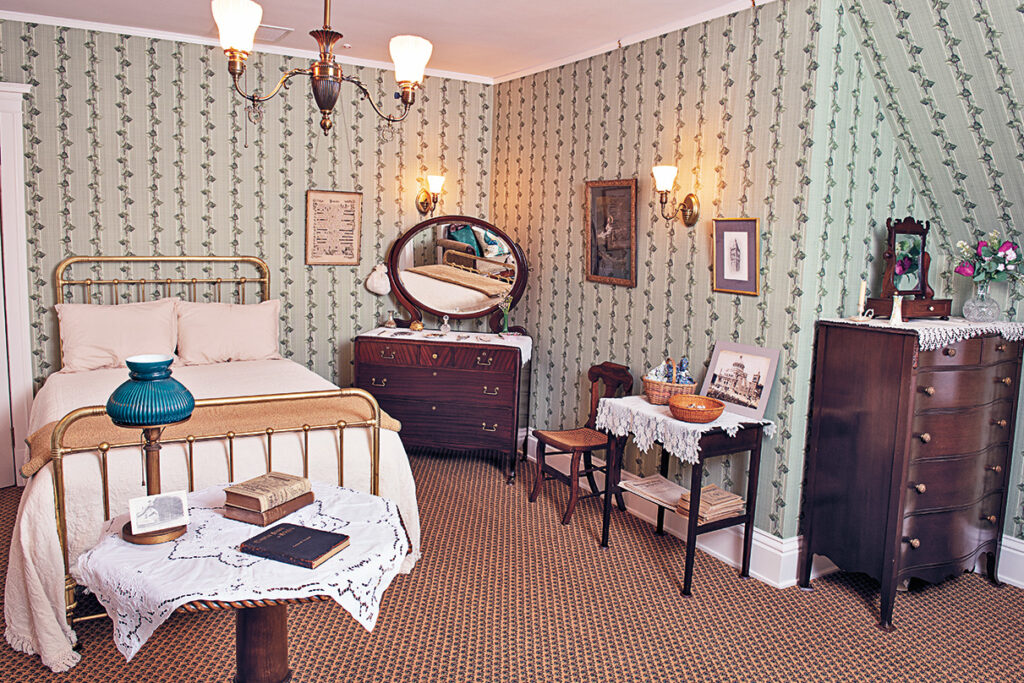
Located just a short flight of stairs away from Mary Baker Eddy’s suite, Laura Sargent’s cozy corner room on the third floor offered both a peaceful retreat and easy access to her Leader. “Rarely out of sight, always within hearing,” as colleague William Rathvon described her, Mrs. Sargent served in many capacities—companion, household manager, righthand woman, and, as Mrs. Eddy dubbed her, “true and helpful friend.”1 Laura Sargent was also one of the metaphysical workers, a role she was well qualified for as an experienced Christian Science practitioner and teacher. Tucked under the eaves, this spacious room would have afforded her the space she needed for quiet study and prayer.
After Mrs. Eddy’s passing, Mrs. Sargent was appointed the official custodian of 400 Beacon Street by The Christian Science Board of Directors. She also served on the Bible Lesson Committee and taught the 1913 Normal class while living here.
Mirror image: At the time Longyear acquired the house, the en suite bathroom was an empty room with peeling plaster. When sharp-eyed Longyear staff members caught a glimpse of the original bathroom in the dresser mirror in a historic photograph, the decision was made to recreate it. The photograph helped the team determine the location of all the fixtures, says Rex Nelles, senior manager of historic houses, with the exception of the tub. Not visible in the photograph, it was moved from watchman Jonathan Irving’s former room in the basement and placed in the only logical spot remaining. The wooden lavatory tank was custom-made, and the remaining fixtures were relocated from other parts of the house. All the hardware was freshly nickel-plated to look new. A volunteer created clothing suitable for a woman of that era to display, giving visitors the sense that the room’s occupant has just stepped out.
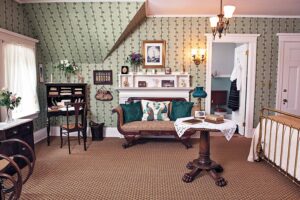
Color sleuthing: As in all of the household members’ bedrooms, Mrs. Sargent’s wallpaper was unique. However, her room had been repurposed over the decades, and the wallpaper removed. Black-and-white historic photographs provided evidence as to the pattern, but the exact colors left the restoration team scratching their heads. A breakthrough came when wall sconces were removed, revealing scraps of the still-vibrant green paper underneath.
Seeking and finding: As in most of the workers’ rooms in this house, no original furnishings remained in Mrs. Sargent’s room. Perseverance, patience, and prayer were required as the Longyear staff searched for period furniture and decorative objects to bring the rooms to life.
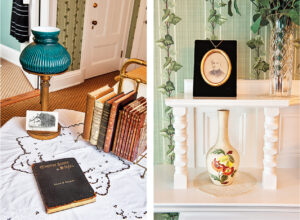
Photo at top of page: The wall sconces pictured here concealed a long-kept secret—scraps of original wallpaper!
Each “stop” in these freshly interpreted period rooms touches on fascinating details about historic restoration. And it also offers a window into the daily routines of “family” life and the prayer and practical accomplishments that took place during the three years that Mrs. Eddy and her staff lived and worked at 400 Beacon Street (1908–1910).
The Dearest Spot on Earth”: Part 1
Introduction
The Library (October 2024)
The Dining Room (November 2024)
Mrs. Eddy’s Study (December 2024)
The Pink Room (January 2025)
Calvin Frye’s Office (February 2025)
“The Dearest Spot on Earth”: Part 2
Introduction
The Kitchen (June 2025)
The West Room (July 2025)
Laura Sargent’s Room (this page)
The Sewing Room (September 2025)