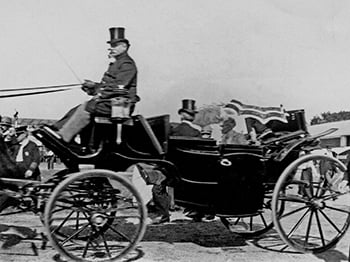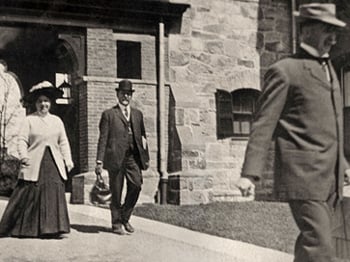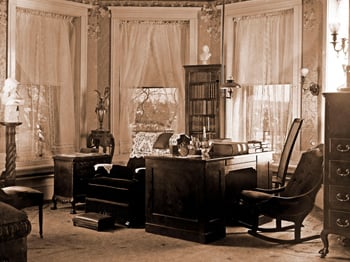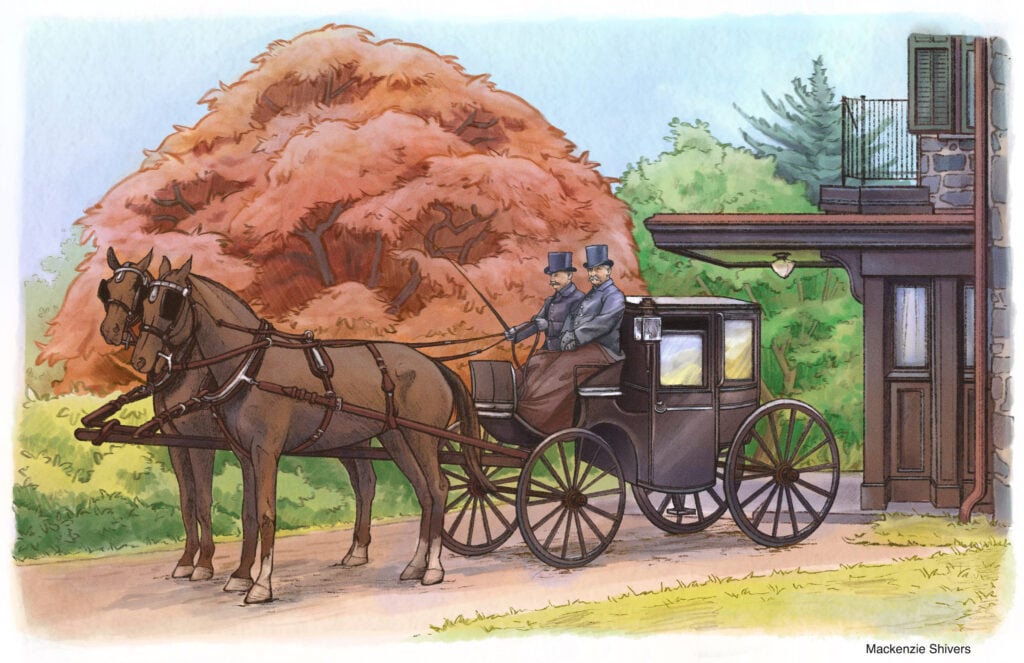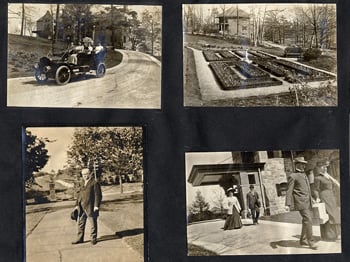
Nelson Molway, a groundskeeper at Mary Baker Eddy’s Chestnut Hill home, remembered a day when he was tending the flower beds next to the porte-cochère Mrs. Eddy used each afternoon for her carriage rides. As he finished the job, a household worker turned up with something for him: a $5 bill and a calling card with a penciled message, “Thanks Eddy.”1 The inhabitant of the study right upstairs had seen his labors and was grateful.
“It was a joy to work for her,” he recalled of his time in Mrs. Eddy’s employ. “It seemed as if she was never too busy to notice the little services others rendered and to express some word of gratitude.”2
The reminiscences of the workers at Pleasant View, Mrs. Eddy’s home in Concord, New Hampshire, and 400 Beacon Street record a plethora of gifts from the Leader of Christian Science—showing her tender sensitivity to the needs of those around her and a loving sense of gratitude. A pair of gloves for faithful John Salchow, jack-of-all-trades at both homes.3 Shirtwaists and ribbons for personal maid Adelaide Still.4 A Bohemian glass vase with hand-painted pansies for pansy-loving cook Minnie Weygandt—not to mention handkerchiefs, aprons, and shawls.5
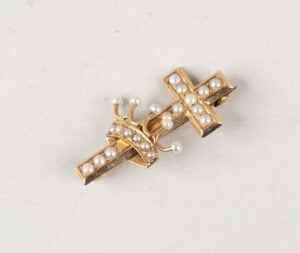
Sometimes, the tokens of Mrs. Eddy’s gratitude were of substantial value—including a $100 check for Pleasant View estate superintendent Joseph Mann one Christmas, accompanied by a note (“With gratitude and love for your kindness and faithful help the past year, I am lovingly your debtor, Mother, Mary Baker Eddy”).6 And many early workers, both in and out of the household, received jewelry from their Leader.
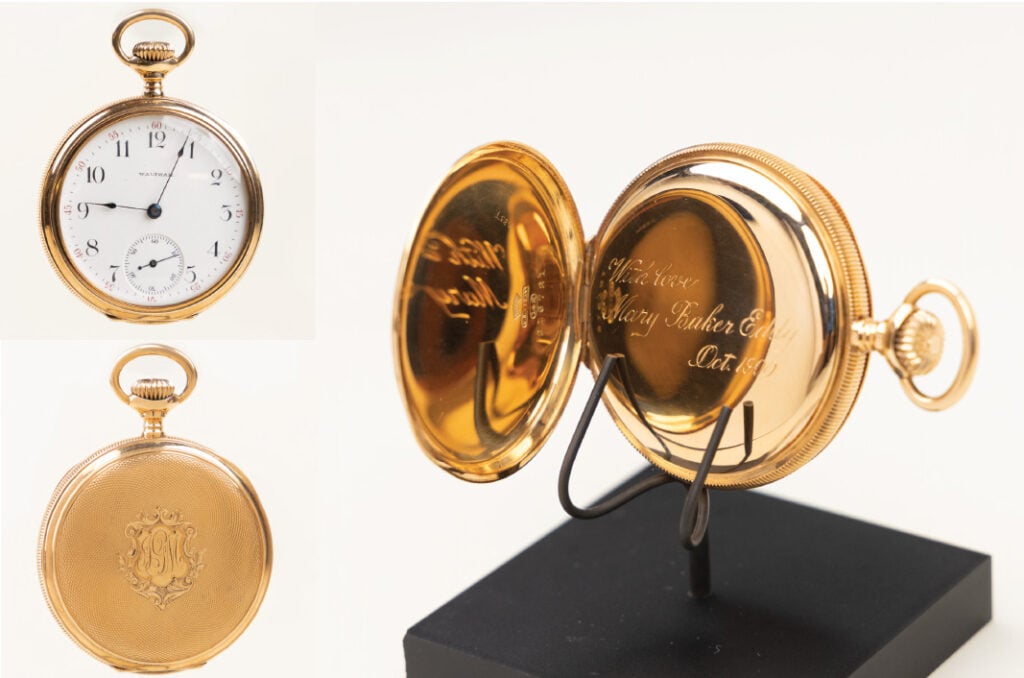
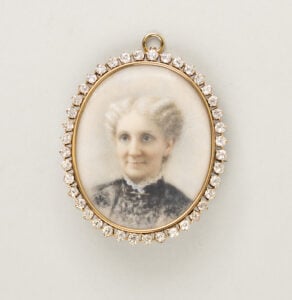
Today, some of these latter treasures are preserved in the Longyear vault (see “Safeguarding the Evidence“). In a wide metal drawer, carefully boxed, for example, is a gold heart-shaped pin with diamonds that Mrs. Eddy presented to Ella Hoag, C.S.D., in gratitude for her service at 400 Beacon Street. Nearby, nestled in cotton, is a diamond-encircled brooch—with a painted miniature of the Leader of Christian Science—given by Mrs. Eddy to Augusta Stetson, who was at the time a promising student. And at the back of the drawer is a gold pocket watch she gave Mr. Mann, carrying the engraving, “With love, Mary Baker Eddy.”
The stories behind these gifts did not always survive. But in Joseph Mann’s reminiscences, he recorded his interchange with Mrs. Eddy when he received the watch:
In thanking her I said quite earnestly, “It will remind me always to be on time.” Mrs. Eddy smiled appreciatively and said, “Yes, dear, it will remind you that time is precious and belongs to God; and throughout time, it will say to you, ‘Watch!’”7
To many of the recipients, Mrs. Eddy’s gifts held a lesson or higher meaning. Perhaps John Salchow captured it best, when thanking her for his gloves: “When I see how kindly you appreciate even the little that I may be able to do, it almost melts my heart within me, and it is this thought I prize infinitely higher than the gift itself.”8
Alice M. Hummer is Longyear’s director of communications.